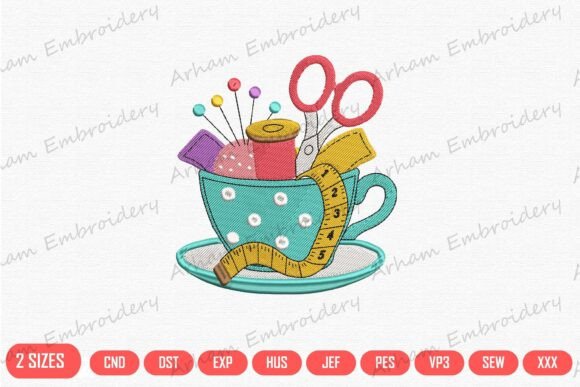
Vintage Teacup Sewing Essentials
First Impression: Charming, Nostalgic, and Instantly Recognizable
As an embroidery designer who’s set up at over 40 craft fairs and stocked handmade goods in boutique shops from Portland to Asheville, my gut reaction to Vintage Teacup Sewing Essentials is immediate: this is a warm, approachable, and deeply relatable motif. It leans into vintage charm without tipping into kitsch — think soft florals, gentle curves, and a quiet confidence rather than loud graphics or cartoonish exaggeration. It reads as “elegant farmhouse” — not too fussy, not too rustic, just right for sewists who love heirloom aesthetics with modern practicality. That balance is gold at a crowded market booth.
Where It Shines: Product-by-Product Real-World Fit
This design isn’t one-note — it flexes beautifully across your most profitable handmade categories:
- Tote bag design: Works brilliantly as a centered chest or lower-side focal point. The teacup shape anchors the composition; tools inside add visual interest without overwhelming the fabric’s drape.
- Apron embroidery: Ideal for the pocket or bib area. Its vertical orientation echoes classic apron silhouettes, and the “sewing essentials” theme reinforces function while feeling personal.
- Tea towel embroidery: A standout on linen or cotton tea towels — especially when placed near the hem or corner. Customers instantly connect it to kitchen creativity and giftability.
- Embroidered patch: Highly effective at 3–4 inches wide. Clean outlines and moderate detail hold up well when cut and ironed, making it perfect for jackets, bags, or quilt labels.
- Fabric pouch & pillow cover: Adds personality without competing with bold prints. On neutral backgrounds, it reads as thoughtful, curated, and handmade — not mass-produced.
- Craft fair booth sample: Embroidered on a small framed hoop or stitched onto a mini apron display piece? It draws eyes and invites conversation — especially among quilters and hand-stitchers who appreciate layered symbolism.
- Etsy seller & digital embroidery file: Strong search alignment with terms like “vintage sewing embroidery,” “teacup craft design,” and “seamstress gift.” Pair it with printable mockups showing multiple applications — customers love visualizing how it’ll look *on their project*.
What Makes It Sell: Clarity, Charm, and Commercial Sense
Vintage Teacup Sewing Essentials succeeds because it communicates its purpose in under two seconds. No decoding needed — if you sew, quilt, or love handmade culture, you get it. That instant recognition is rare and valuable. It works equally well as a subtle accent (think tiny teacup on a cap brim) or a generous 5-inch focal embroidery on a market bag. Photographs cleanly for online listings — the contrast between cup and tools creates natural depth, and thread colors pop against light or medium fabrics.
For batch production? It’s highly repeatable. Moderate stitch density means consistent results across machines and operators. Unlike dense floral monograms or ultra-fine script, this design doesn’t demand constant tension checks or rehooping. That translates to faster turnaround, fewer rejects, and more reliable margins — essential for small shop product lines.
Careful-Use Notes: Protect Your Stitch Quality
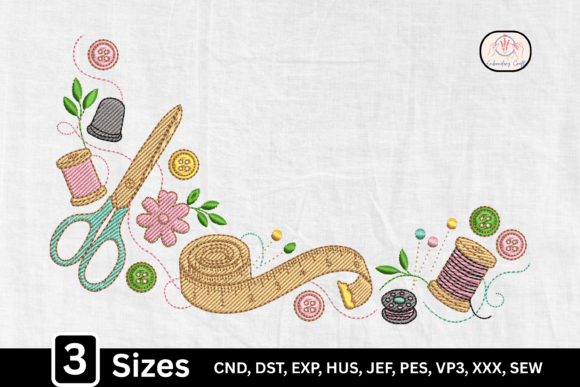
That said, respect the details. The scissors, pins, and spools inside the cup are charming — but they’re also potential trouble spots:
- Avoid shrinking the design below 2.5 inches — tiny tool shapes blur on textured towels or thick canvas.
- On dark fabric, confirm thread contrast early: pale pastel threads may vanish; opt for matte metallics or high-contrast solids instead.
- Curved cap surfaces require careful hooping and possibly reduced density in the cup’s rounded base — test first.
- Dense areas (like tightly wound thread spools or layered measuring tape) benefit from lightweight tear-away stabilizer — skip heavy cut-away unless stitching on unstable knits.
- Always check spacing between tools — overcrowding leads to skipped stitches or thread nests during long runs.
Design Impact: More Than Just Pretty Stitching
This isn’t just decoration — it’s brand language. When embroidered on your tote bags or tea towels, Vintage Teacup Sewing Essentials quietly signals quality, intention, and community. It elevates perceived value: customers see it and think “this was made *for me*, by someone who understands my craft.” At a craft fair, that emotional resonance builds trust faster than price tags or signage.
In your booth display, it strengthens cohesion — imagine a shelf of tea towels, an apron on a hanger, and a pouch on a tray, all sharing the same motif. That consistency tells shoppers you’re a serious maker, not a one-off vendor. For Etsy sellers and digital designers, it’s versatile design assets that support storytelling: use it in your banner, packaging, and even social posts to reinforce your niche.
Embroidery Designer Checklist Before You Cut Fabric
Before committing to production — especially for commercial embroidery or wholesale orders — run through these non-negotiables:
- Test the machine embroidery design on scrap fabric matching your final product (linen for towels, denim for totes, etc.).
- Verify thread colors translate well — swatch on both light and dark bases.
- Review spacing and stitch density: does the cup sit comfortably within your standard hoop size?
- Confirm stabilizer choice aligns with fabric texture — no puckering on terry cloth or distortion on chambray.
- Create at least one real finished product mockup — not just digital. See how it wears, folds, and photographs in natural light.
- Compare how the design reads across three fabric colors — what feels cohesive with your current line?
- Double-check licensing: if selling finished products or offering the embroidery file commercially, ensure you have full rights for Sewing Crafts and Embroidery use.