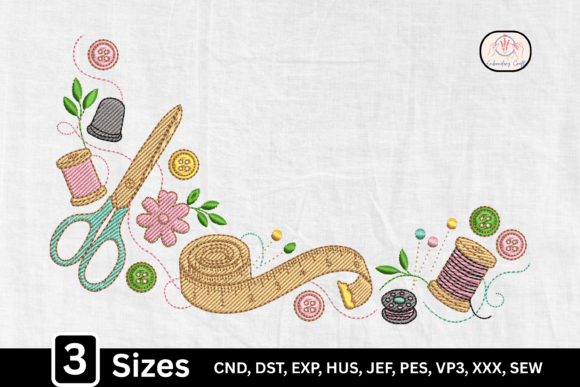
Sewing Corner Sewing Tools
First Impression: Charming, Nostalgic, and Instantly Recognizable
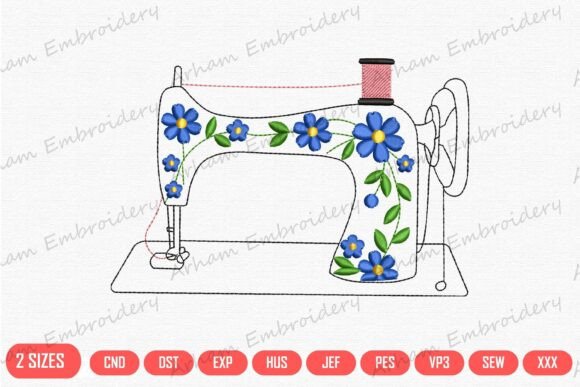
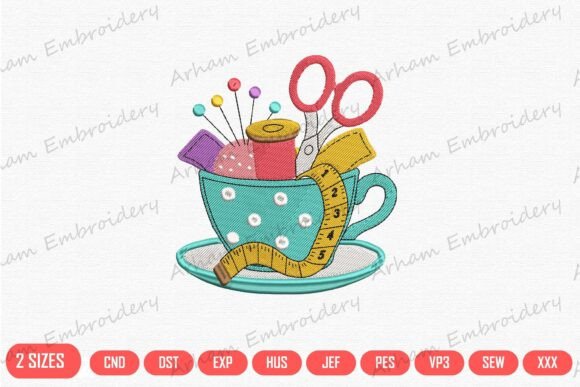
As an embroidery designer who’s prepped over 200 craft fair booths—and shipped thousands of embroidered tote bags, aprons, and tea towels—I opened Sewing Corner Sewing Tools expecting something warm, intentional, and shelf-ready. What I got was exactly that: a cohesive, border-frame-style machine embroidery design that feels both nostalgic and modern—like a vintage sewing manual reimagined for today’s handmade market. It’s not loud or trendy; it’s cute without being cutesy, decorative without being fussy, and carries just enough detail to signal “handmade with care” at a glance. That subtle charm is gold at craft fairs—where buyers pause for under three seconds before moving on.
Where It Shines: Craft Fair & Boutique Product Pairings
Sewing Corner Sewing Tools works exceptionally well as a focal design on medium-scale items where clarity and storytelling matter. On a natural linen tote bag? Perfect—it reads cleanly from six feet away and invites closer inspection. On a cotton apron (especially bib-style or pocket-front), it adds personality without overwhelming the garment’s utility. As tea towel embroidery, it elevates a functional kitchen item into a giftable small shop product—ideal for holiday markets or bridal shower bundles.
It also excels as an embroidered patch: clean lines, balanced negative space, and consistent stitch density make it stable for iron-on or sew-on application. For caps and curved surfaces? Use caution—this isn’t a low-profile monogram. The border frame structure benefits from flat, stable fabric, so reserve it for structured caps with smooth front panels or pre-stabilized twill.
On pillow covers and fabric pouches, Sewing Corner Sewing Tools adds instant cohesion—especially when paired with coordinating thread colors (think navy on oatmeal, sage on cream, or charcoal on ivory). And yes—it photographs beautifully for printable mockups and Etsy listings. Its balanced composition avoids awkward cropping, and the gentle rhythm of tools (scissors, thimble, spool) creates visual interest without clutter.
Production Realities: Smart Batch-Making Starts Here
This is a highly repeatable digital embroidery file—no surprises in scale shifts or layering inconsistencies. As a commercial embroidery asset, it holds up across sizes: large enough to anchor a market bag, small enough (at ~3.5" wide) to grace a tea towel corner without shrinking into invisibility. But here’s the catch: don’t push it smaller than 2.75". Tiny lettering and fine tool outlines (like the needle eye or thimble ridges) risk stitching poorly on dense fabrics or losing definition on textured towels.
Stitch density is moderate—not sparse, not heavy. That means it runs reliably on mid-tier home machines and commercial multi-needles alike. Still, always test the design on scrap fabric first. Especially if using dark fabric: confirm thread contrast is strong enough to read clearly in booth lighting. And always check spacing between elements—tight corners in the frame can pull if stabilizer isn’t matched to your base fabric.
Careful-Use Notes for Handmade Sellers
- Dense stitch areas: The inner border and tool handles may compress on thick fabrics like canvas or duck cloth—use cutaway + tear-away combo stabilizer.
- Tiny details: Avoid scaling below 2.75"; fine lines blur on terry cloth, waffle weave, or loosely woven linen.
- Curved cap surfaces: Not ideal for unstructured caps—stick to flat-front trucker or structured cotton twill.
- Dark fabric: Test thread brightness—matte black thread on charcoal fabric fades visually. Opt for high-sheen rayon or metallic accents instead.
Why This Design Strengthens Your Booth & Brand
In a sea of generic florals and minimalist quotes, Sewing Corner Sewing Tools stands out by speaking directly to your audience’s identity: makers, menders, stitchers, and keepers of craft. It doesn’t just decorate—it validates. When a customer sees it on your apron or tote, they think, *“This person gets me.”* That emotional resonance boosts perceived value, encourages longer booth dwell time, and increases cross-selling (e.g., “Oh! Do you have this on a tea towel too?”).
For Etsy sellers and digital designers, this design strengthens brand consistency across listings—pair it with soft, neutral photography and cohesive packaging, and it becomes instantly recognizable as part of your design assets. It also lends itself to smart bundling: “Sewing Corner Starter Set” (tote + patch + tea towel) feels intentional, not random.
Embroidery Designer Checklist Before You Cut Fabric
- Test the machine embroidery design on scrap fabric matching your final product’s weight and texture.
- Verify thread contrast—especially for finished product visibility under craft fair tent lighting.
- Review spacing and alignment in your embroidery software—ensure no elements drift near hoop edges.
- Confirm hoop size compatibility; avoid stretching delicate borders across oversized hoops.
- Inspect stitch density—adjust if needed for your fabric type (e.g., reduce density slightly for lightweight cotton).
- Choose stabilizer wisely: cutaway for stretchy knits, tear-away for stable wovens, fusible for patches.
- Create at least one real mockup—not just a digital preview—to assess drape, color harmony, and tactile appeal.
- Compare fabric colors side-by-side: what looks warm on screen may read cool in person.
- Confirm commercial licensing terms—this is essential before selling any handmade product featuring the design.
The Bottom Line for Creative Entrepreneurs
Sewing Corner Sewing Tools isn’t just another embroidery file—it’s a quiet confidence-builder for your craft fair product lineup. It performs consistently across categories, photographs with intention, and communicates craftsmanship without shouting. It’s the kind of design that turns browsers into buyers, and buyers into repeat customers—because it feels personal, purposeful, and proudly handmade. Whether you’re an Etsy seller building a signature collection, a boutique maker curating giftable small shop products, or a Cricut crafter expanding into machine embroidery, this design earns its place in your Sewing Crafts toolkit. Just remember: respect the details, test with intention, and let the charm speak for itself.