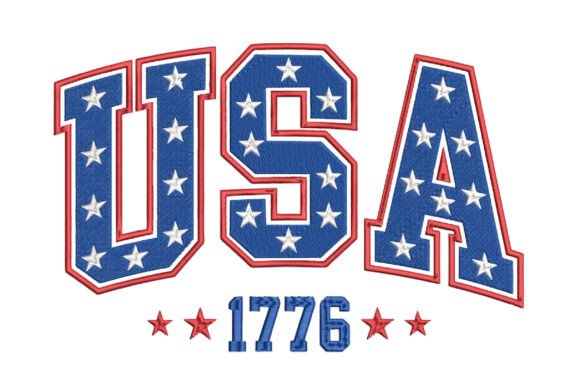
USA 1776 Embroidery Design
A Bold, Brand-Ready Patriotic Statement for Small Business Merch
As an embroidery designer who’s developed hundreds of commercial designs for cafés, boutiques, bakeries, pet brands, and handmade studios, my first impression of the USA 1776 Embroidery Design is immediate: it’s confident, unapologetically patriotic, and built for visibility—not just decoration. The large “USA” lettering filled with stars signals classic Americana, but its bold scale and graphic density suggest modern branding potential, not just seasonal decor. It reads as professional and spirited—not rustic or folksy—making it versatile for businesses that want to express community pride without sacrificing polish.
How USA 1776 Embroidery Design Performs Across Real Business Applications
This design shines where impact matters most: on embroidered patches, staff aprons, front-of-cap placements, and tote bag corner accents. Its strong silhouette holds up beautifully at 2.5–3.5 inches wide—the sweet spot for chest logos on uniforms and branded aprons for coffee shops or florists. When stitched on twill or canvas, the star-filled letters read clearly from across a farmers’ market stall or boutique counter. For small business merch, it works especially well as a subtle yet meaningful brand add-on: think a single patch sewn onto the sleeve of a bakery’s linen apron or embroidered beside a logo on a reusable tote.
For creative studios and Etsy sellers, the USA 1776 Embroidery Design adds instant thematic resonance to Independence Day collections—without leaning into cliché. Unlike ornate eagles or fireworks motifs, this design balances heritage and minimalism, letting your handmade product remain the focus while still communicating values like authenticity and local pride. It also translates cleanly into printable mockups for client presentations or online listings, helping crafters visualize how the finished product will elevate their brand identity.
Where to Use USA 1776 Embroidery Design Thoughtfully
While powerful, this design demands smart placement. Avoid using it below 2 inches in width—tiny versions lose legibility, especially the internal star details within the “USA” letters. Cap fronts with tight curvature can distort the top and bottom edges of large lettering, so always test stitch on a real cap blank before bulk production. On dark uniforms (navy, charcoal, black), confirm thread color contrast: white or bright silver metallics pop best, but avoid pale golds or creams that fade visually.
High stitch density is implied by the star-filled letterforms—so prioritize medium-weight stabilizer for woven fabrics and cutaway for knits or textured materials like burlap or linen blends. If your small business uses highly textured fabric for aprons or tote bags, run a physical test first: dense stitching can flatten texture or cause puckering if stabilizer isn’t matched precisely. Also note—frequent washing may affect long-term durability of fine internal star outlines; recommend gentle cycles for staff uniforms or customer-facing merchandise.
Strengthening Brand Identity Without Overshadowing Your Core Message
The USA 1776 Embroidery Design doesn’t replace your primary logo—it complements it. Used intentionally, it reinforces trust and shared values: patriotism, craftsmanship, and local investment. A pet brand stitching this on leashes or bandanas signals community spirit; a florist adding it to delivery totes quietly communicates hometown pride. That emotional resonance boosts buyer engagement—especially during summer events, Fourth of July markets, or small-town festivals.
Crucially, it maintains visual consistency across touchpoints: same design on a staff cap, a shop banner, and a limited-edition tote creates cohesion. But beware overuse—applying it to every item dilutes its impact. Reserve it for hero pieces or seasonal launches. When paired with your existing design assets, it should feel like a natural extension—not a stylistic detour.
Practical Embroidery Designer Notes Before You Stitch
- Always test in black and white first. This reveals spacing issues, unintended gaps between stars and letter edges, and overall balance—critical for clean commercial embroidery.
- Verify patch size compatibility. Does the USA 1776 Embroidery Design hold detail at your target patch dimension? If sourcing a digital embroidery file, check whether it includes multiple sizes—or if resizing requires re-digitizing.
- Review thread color contrast on your base fabric. Stars inside letters need clear separation from background thread. A high-contrast combo (e.g., navy fabric + white thread) ensures readability.
- Inspect letter spacing and kerning. Tight tracking between “USA” and “1776” affects flow—especially on curved surfaces like caps or sleeves.
- Confirm hoop size requirements. Large lettering may require a 5x7" or larger hoop. Ensure your machine and frame support it before committing to production.
- Test on real fabric—not just stabilizer. Fabric texture, drape, and stretch change how stitches lay down. A test run prevents costly rework.
- Create a physical mockup for client approval. Especially for custom apparel orders, seeing the USA 1776 Embroidery Design stitched on actual material builds confidence faster than digital proofs alone.
- Compare it beside your other design assets. Does it harmonize with your logo, fonts, and color palette—or clash? Consistency strengthens recognition.
- Confirm commercial licensing. If you’re selling finished goods (not just files), ensure the USA 1776 Embroidery Design permits commercial embroidery use. When in doubt, contact the seller directly before scaling production.
Final Thoughts for Small Business Owners and Embroidery Professionals
The USA 1776 Embroidery Design is more than seasonal flair—it’s a strategic branding tool. When applied with intention, it elevates custom apparel, strengthens community connection, and adds premium weight to handmade products. Whether you’re an embroidery shop fulfilling orders for local bakeries or an Etsy seller building a patriotic-themed collection, this design delivers presence, personality, and professionalism. Just remember: great embroidery starts with thoughtful review—not just beautiful files. Test, compare, stabilize, and align it with your brand voice. Then stitch with purpose.