Soccer Player Football Sports
First Impression: Energy in Motion, Not Just a Silhouette
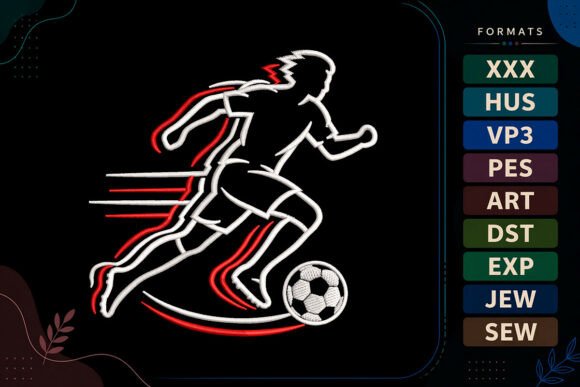
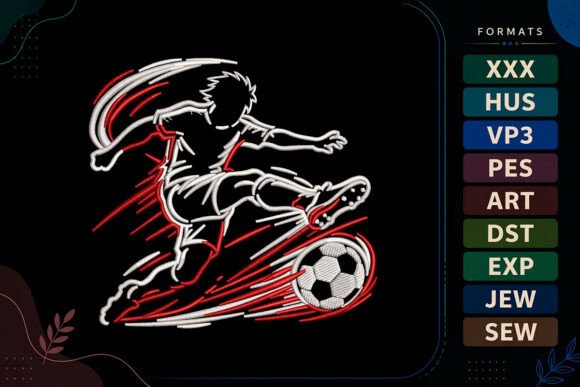
Opening the Soccer Player Football Sports embroidery file, I didn’t see another generic athlete outline—I saw urgency. The pose is mid-kick, weight shifted, leg extended, ball slightly airborne, and those motion lines? They’re not afterthoughts. They’re intentional rhythm—suggesting speed without clutter. This isn’t a static logo or a flat icon; it’s a moment frozen with visual momentum. For designers who care about storytelling through stitch, that matters. It reads as confident, athletic, and approachable—not corporate, not cartoonish, but genuinely spirited. That tone lands perfectly for youth teams, school spirit gear, fan merchandise, or even playful nursery decor where sport meets celebration.
A Real Project Test: Embroidering It on a Heavyweight Cotton Tote
Last week, I stitched Soccer Player Football Sports onto a natural canvas tote for a local soccer camp’s volunteer gift. Used medium tear-away stabilizer, 40-weight polyester thread, and a 5x7 hoop. The result? Clean, bold, and surprisingly legible at 4.2 inches wide. The motion lines held their shape—no skipped stitches or thread nesting—and the ball retained its roundness thanks to balanced fill stitch density. What stood out most was how well it scaled: no detail vanished, no edge bled into the fabric grain. Customers noticed it immediately—not just “a soccer design,” but “that player kicking *right there*.” That kind of recognition builds trust in your handmade product. It tells buyers you chose thoughtfully, not just quickly.
Where It Shines (and Where to Pause)
Soccer Player Football Sports works beautifully on:
- Custom apparel: Sweatshirt embroidery gains instant personality—especially on sleeves or lower back panels where the motion lines echo body movement.
- Embroidered patches: The compact composition and clear silhouette make it ideal for sew-on or iron-on patches on jackets, backpacks, or caps.
- Baby embroidery: On a onesie or bib, it reads sweetly energetic—not aggressive—especially when stitched in soft pastel threads.
- Holiday embroidery: Think Christmas stockings or Easter egg towels—this design adds sporty charm without seasonal cliché.
- Small shop product: As a boutique branding accent on aprons, tea towels, or pillow covers, it signals community, activity, and authenticity.
But be thoughtful in these situations:
- Thin or stretchy fabric: The motion lines rely on crisp stitch definition—on jersey or lightweight knits, use cut-away stabilizer and reduce top tension slightly.
- Curved surfaces like caps: The forward lean of the player helps—it reads naturally on a front cap panel—but test placement first. Avoid stitching too high on the crown where distortion creeps in.
- Dark fabric: The design’s energy depends on contrast. On navy or black, avoid light gray thread—go for white, lime, or cobalt to keep the motion lines visible.
- Tiny lettering or dense accents: This isn’t an applique design with layered fabrics or intricate satin-stitched details. It’s strong as-is—don’t overcomplicate it with added text unless the font is bold and generously spaced.
What It Adds to Your Finished Product
Using Soccer Player Football Sports elevates more than just aesthetics—it shapes perception. A plain sweatshirt becomes team-ready. A simple tote feels purpose-built. A baby blanket gains narrative warmth. That shift happens because the design carries intention: it’s not decoration, it’s identity. For Etsy sellers and craft fair vendors, that translates directly to buyer engagement. People don’t just buy embroidered items—they buy connection. And this design connects fast. It also supports brand consistency: whether you’re selling digital embroidery files or physical goods, its clean structure holds up across mockups, social posts, and product tags. Plus, customers consistently comment on how “lively” it looks—proof that motion-based stitch work resonates emotionally, not just visually.
Practical Designer Notes Before You Stitch
Before committing to a client order or bulk production:
- Test on scrap fabric first—especially if using textured weaves or blends. Motion lines can blur on heavy terry cloth or loose linen.
- Check thread color contrast in both natural and artificial light. Some greens or oranges fade into khaki or charcoal under certain bulbs.
- Review stitch density—not just for speed, but for wash durability. High-density fills hold up better on frequently laundered items like baby clothes or kitchen towels.
- Confirm hoop size compatibility with your machine and intended placement. This design fits comfortably in a 5x7, but verify before hooping expensive fabric.
- Inspect small details—especially where the foot meets the ball and where motion lines taper. These are common trouble spots on low-res files.
- Test black-and-white mockups to assess value contrast—critical for printable mockups and digital product previews.
- Compare light and dark fabric backgrounds side-by-side. A design that pops on white may disappear on heather gray.
- Use proper stabilizer—medium tear-away for stable wovens, cut-away for knits or unstable fabrics.
- Verify licensing before selling finished items or digital embroidery files commercially. If terms aren’t clearly stated with the Soccer Player Football Sports download, reach out to the source.
Final Thought: A Design That Moves With Purpose
Soccer Player Football Sports doesn’t shout. It leans in, kicks, and carries energy forward—just like the best handmade products do. It’s versatile enough for a teen’s hoodie, refined enough for a boutique apron, and spirited enough for a toddler’s first team gift. As a designer and reviewer, I don’t reach for it when I need “something sports-related.” I reach for it when I need authenticity, clarity, and quiet confidence in every stitch. That’s why it stays in my active design folder—not as filler, but as a go-to for real projects, real people, and real impact.