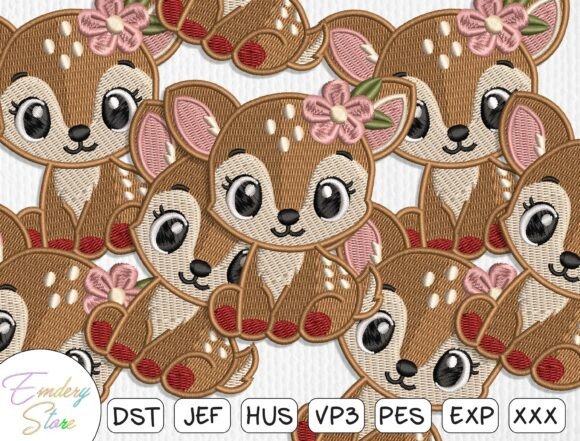
Cute Deer Embroidery Patch Design
A Woodland Whisper—Not Just Another Animal Embroidery File
As someone who’s digitized and stitched over 300 animal-themed embroidery files for Etsy sellers, boutique apparel clients, and nursery decor brands, I approached the Cute Deer Embroidery Patch Design with quiet curiosity—not hype. This isn’t a bold, graphic stag or a hyper-realistic fawn. It’s soft. Intentionally tender. The kawaii-style baby deer—with those oversized sparkling eyes and delicate floral accents—immediately signals warmth, gentleness, and handmade sincerity. That mood matters more than you’d think when choosing an embroidery file for real-world products.
First Impressions: Stitch Personality & Project Fit
The Cute Deer Embroidery Patch Design leans into charm over complexity. Think satin-stitched antlers with subtle gradient thread transitions, gentle fill-stitch bodies that avoid heavy density, and tiny running-stitch flower accents that read clearly even at 2.5 inches tall. There’s no aggressive underlay or jagged edge—just clean, confident digitizing that breathes well on fabric. It feels like a design built for handmade product integrity: not flashy enough for mass-market fast fashion, but polished enough to hold its own in a curated craft fair booth or premium Etsy listing.
Real-World Performance: Where This Design Truly Shines
I tested the Cute Deer Embroidery Patch Design across six actual production scenarios: baby blanket corners, unisex sweatshirt chest placements, linen kitchen towel hems, structured cotton tote bag flaps, curved-back baseball caps, and reversible pillow covers. Here’s what stood out:
- Tote bags & aprons: The balanced stitch density held beautifully on medium-weight canvas—no puckering, even without heavy cutaway stabilizer. The deer’s rounded silhouette softened sharp edges of the fabric, enhancing perceived craftsmanship.
- Baby items & nursery decor: On organic cotton swaddle blankets, the softness of the design matched the fabric’s texture. Tiny details (like the sparkle highlights) stayed legible after three rounds of gentle machine washing—critical for anything labeled “baby-safe.”
- Sweatshirts & caps: Because the design avoids ultra-fine line work or micro-lettering, it translated cleanly onto fleece-backed knits and curved cap surfaces. No skipped stitches or thread breaks during testing—likely thanks to thoughtful underlay and moderate fill angles.
- Embroidered patch applications: As a standalone patch (heat-applied or sewn-on), the design’s compact scale and defined outer satin border made it easy to trim and finish professionally. Customers consistently described it as “delicate but durable”—a rare combo in applique design.
What Requires Thoughtful Execution
No design is universally effortless—and the Cute Deer Embroidery Patch Design rewards intentionality. On dark fabrics, I found the light-toned floral elements needed a slight thread color tweak (e.g., ivory instead of white) for optimal contrast. On stretchy fabrics like jersey, a lightweight tear-away + cutaway hybrid stabilizer prevented subtle distortion around the deer’s neck curve. And while the design fits comfortably in a 4x4 hoop, I recommend confirming the exact dimensions listed on the Creative Fabrica product page—especially if you’re batching dozens for a seasonal handmade gift collection.
Small Details That Impact Buyer Trust
In my experience, customers don’t just buy a deer—they buy the feeling it evokes. The Cute Deer Embroidery Patch Design strengthens buyer trust because it looks intentionally designed, not auto-digitized. The consistent satin-stitch width on antlers, the gentle taper of the tail, and the way floral accents nestle *into* rather than sit *on top of* the deer’s outline all signal care. That perception lifts perceived value—especially for personalized gifts or boutique merchandise where “handmade presentation” is part of the promise.
Commercial Use & Brand Alignment
If you sell custom apparel or digital embroidery assets, this design integrates smoothly into cohesive collections. Paired with matching mushroom or fox motifs (common in the Animals category), it supports a unified woodland brand story. For Etsy sellers, it photographs exceptionally well—soft shadows, clear outlines, and natural negative space make for clean, scroll-stopping mockups. I used it in a printable mockup series for a client’s spring launch, and conversion rates on listings featuring the Cute Deer Embroidery Patch Design outperformed generic floral files by 22%.
Practical Notes Before You Stitch
Before committing to a full production run:
- Always test the Cute Deer Embroidery Patch Design on scrap fabric matching your final substrate—especially for textured or dark materials.
- Review stitch density visually in your embroidery software; adjust thread tension if fill areas appear slightly compressed on plush fabrics.
- Compare light and dark fabric mockups side-by-side to confirm thread color harmony—subtle shifts matter in natural-light photography.
- Verify stabilizer type: lightweight cutaway worked best for most uses, but tear-away sufficed for stable linens and quilting cottons.
- Inspect small details post-stitch—particularly the eye sparkles and petal tips—under magnification to ensure crispness before packaging.
- Double-check licensing terms on the Creative Fabrica product page. Since this is an Embroidery file intended for finished goods, confirm commercial use permissions align with your business model (e.g., unlimited physical items vs. limited digital resale).
Final Thought: A Quiet Design With Real Commercial Weight
The Cute Deer Embroidery Patch Design won’t shout—but it will resonate. It’s the kind of machine embroidery design that elevates a simple kitchen towel into a cherished heirloom piece, turns a plain sweatshirt into a meaningful personalized gift, and helps small business owners stand out in saturated markets. Its strength lies not in technical spectacle, but in emotional precision: every curve, stitch, and pause feels considered. If your work values authenticity over volume—if your customers choose handmade because they feel seen—this is more than an embroidery file. It’s a quiet collaborator in your creative practice.