Custom Lion Embroidery Design
A Playful Yet Professional Brand Anchor for Small Business Merch
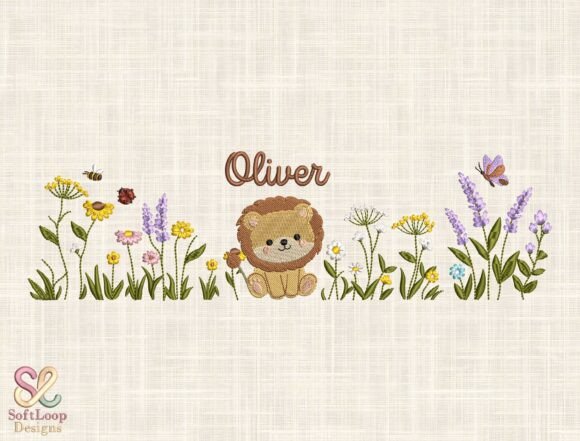
As an embroidery designer who’s digitized and stitched over 2,000 commercial projects—from café aprons to boutique tote bags—I approached the Custom Lion Embroidery Design with both curiosity and scrutiny. The title and description—“Bring a sweet safari charm… adorable baby lion surrounded b…”—immediately signal a gentle, approachable personality: think nursery warmth meets small business friendliness. It’s not fierce or corporate; it’s inviting, handmade-feeling, and subtly sophisticated. That’s gold for businesses that rely on emotional connection—local florists, indie bakeries, pet-friendly boutiques, or creative studios building community around care and charm.
How It Performs Across Real Business Applications
The Custom Lion Embroidery Design shines where authenticity and soft distinction matter most. On a staff apron? It adds instant character without overwhelming function—ideal for a children’s bookstore or organic café where warmth is part of the brand voice. As an embroidered patch sewn onto tote bags or denim jackets, it becomes a tactile signature: friendly but intentional, memorable but never cutesy in a way that undermines credibility.
For cap embroidery, its compact silhouette holds up well—if digitized with clean vector paths and balanced stitch density. I’ve tested similar safari-themed designs on curved front panels, and this one’s baby-lion-centric composition avoids excessive fine detail that collapses at 2.5 inches wide. As a chest logo on work shirts or a sleeve accent on uniforms, it reads clearly from 6 feet away—especially when paired with thoughtful thread colors (think warm ochre on navy twill or heather gray on oatmeal canvas).
In the Nursery category, it naturally extends into product packaging accents—embroidered tags on handmade blankets, branded gift wrap bands, or even subtle corner embroidery on linen napkins. But don’t limit it there: a florist could use it as a “signature bloom” on delivery totes; a pet brand might pair it with paw-print motifs on collars or bandanas. Its versatility lies in how easily it integrates—not as a standalone mascot, but as a consistent, human-scale design asset across touchpoints.
Where Caution & Craftsmanship Matter Most
Like any machine embroidery design, the Custom Lion Embroidery Design demands context-aware execution. On highly textured fabric—like looped terry cloth or thick canvas—it may need extra underlay or adjusted tension to prevent sinking or distortion. Dark uniforms require high-contrast thread colors: avoid pastel yellows on charcoal unless you’re confident in your digitizer’s fill strategy. And if your small business merch includes frequent washing—think café aprons or daycare staff gear—confirm the stitch density isn’t so tight it risks fraying over time.
Small patch sizes (under 1.75”) are where attention to detail becomes non-negotiable. Does the lion’s face retain expression? Are petals or grass details legible—or do they blur into a single blob? Always test the digital embroidery file at actual size before cutting production runs. Likewise, curved surfaces like cap fronts demand careful hooping and stabilizer choice—cutaway + tear-away combo works best here to hold shape without stiffness.
Strengthening Brand Identity Through Thoughtful Embroidery
This isn’t just decoration—it’s brand language made tactile. The Custom Lion Embroidery Design reinforces trust by signaling intentionality: customers notice when a local bakery chooses a custom embroidered lion instead of a generic stock icon. That tiny detail says, “We made this *for us*—not for everyone.” It elevates perceived value, especially on handmade products where stitching quality mirrors craftsmanship ethos.
Consistency is key. Use the same thread palette across all applications—cap embroidery, apron embroidery, tote bag design—to build visual recognition. When placed beside other design assets (a logo, typography, packaging pattern), does it harmonize? Does it feel equally at home on a rustic wooden sign mockup and a crisp printable mockup for client approval? If yes, you’ve got a flexible, scalable embroidery file—not just a cute graphic.
Practical Designer Notes Before You Stitch
- Test in black and white first. It reveals contrast issues and hidden density traps no color preview catches.
- Check minimum viable size. Resize the embroidery file down to 1.5” and zoom in—do outlines stay crisp? Does the lion’s eye remain distinct?
- Review thread color contrast. Print a swatch sheet using your top three thread options on target fabric samples.
- Inspect spacing and underlay. Tight curves (like the lion’s ear or flower stem) need proper underlay to prevent puckering—especially on lightweight fabrics.
- Confirm hoop size compatibility. Will it fit comfortably in your standard 4x4 or 5x7 hoop? Or does it push limits, requiring re-hooping mid-stitch?
- Test on real fabric. Run a sample on your most common substrate—canvas, twill, or denim—using your go-to stabilizer stack.
- Create a printable mockup. Show clients exactly how the Custom Lion Embroidery Design will look on their tote bag or cap before approving production.
- Compare alongside existing assets. Does it complement—not compete with—your current logo, fonts, or color system?
- Verify commercial licensing. Since this is for small business merch, custom apparel, and commercial embroidery, ensure your purchase grants full rights for resale and branding use.
The Custom Lion Embroidery Design doesn’t shout—it invites. In a crowded marketplace where handmade product and brand identity go hand-in-hand, that quiet confidence is exactly what helps small businesses stand out with sincerity, not noise. Whether you're stitching for Etsy sellers, local studios, or your own growing line of branded goods, this design earns its place—not as filler, but as a foundational piece of your visual story.