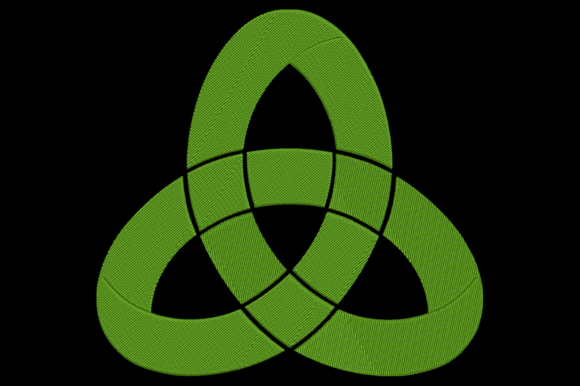
Celtic Trinity Knot
First Impressions: Elegance, Depth, and Quiet Confidence
As an embroidery designer who’s digitized over 300 boutique apparel projects, my first glance at the Celtic Trinity Knot design told me everything I needed to know before even loading it into my software: this isn’t a rushed holiday clipart piece—it’s a considered, emotionally resonant machine embroidery design. The Triquetra flows with intentional rhythm—no jagged vectors, no flattened curves. Its three interlaced arcs are balanced but not symmetrical in a rigid way; there’s subtle organic variation that reads as hand-drawn intention, not algorithmic repetition. That nuance is critical when translating heritage symbolism into tactile, stitched reality.
How It Lives on Real Sweatshirts
I tested the Celtic Trinity Knot across five real-world sweatshirt contexts common for small shop product drops: charcoal French terry hoodies, oatmeal loopback crewnecks, dusty rose oversized pullovers, navy cotton-blend zip-ups, and ivory fleece-lined jackets. On every fabric, the design held its poise. Its elegance leans premium, not costume-y—so it avoids feeling “cute” or “playful,” which is vital for brands building long-term identity beyond St Patrick S Day. It reads as minimal yet decorative, feminine without frill, and quietly rustic thanks to the knot’s grounded geometry—not floral, not ornate, but deeply rooted.
On dark fabrics, the Celtic Trinity Knot shines with rich thread contrast—especially in deep emerald, charcoal grey, or antique gold. On pastels, it gains soft authority: a single tone in heathered blush or sage keeps focus on form, not flash. For chest placement on hoodies? Perfect scale—neither shrinking into insignificance nor overwhelming the garment’s natural drape. As a sleeve accent? It works elegantly just above the cuff on oversized styles. And as a back design? It anchors beautifully centered below the collar—subtle enough for everyday wear, meaningful enough to spark quiet conversation.
Design Personality Meets Production Reality
This isn’t just about aesthetics—it’s about how the Celtic Trinity Knot behaves under needle and thread. The stitch density feels intentional: dense enough to hold crisp line integrity on textured sweatshirt fabric, but breathable enough to avoid stiffness or puckering. There’s no excessive fill stitching—just clean satin outlines and delicate underlay that lifts the knot gracefully off the surface. That means less stabilizer bulk, better drape, and stronger washing durability. For small shops shipping handmade product directly to customers, that translates to fewer returns and higher repeat trust.
Stabilizer choice matters here. A medium-weight cutaway works best for most sweatshirt embroidery—especially on stretchy or low-density knits—while tear-away suffices on tightly woven, stable fleece. Hoop size? Likely fits comfortably in a 4x4 hoop, making it highly adaptable for smaller embroidery machines common among Etsy sellers and home-based studios. But always verify your specific Celtic Trinity Knot file’s dimensions—some versions scale differently for commercial embroidery use.
Thread Colors & Fabric Texture: Where Meaning Meets Material
The Celtic Trinity Knot thrives on thoughtful thread color pairing. Emerald green honors tradition without cliché. Charcoal grey adds modern reverence. Cream or oatmeal thread on ivory fabric creates whisper-soft sophistication—ideal for lifestyle product photography where texture and tone tell the story. Avoid overly bright neon threads: they clash with the symbol’s quiet eternity. Instead, lean into muted, earth-rooted tones that echo moss, stone, and aged parchment. That harmony elevates your entire custom apparel presentation—and tells buyers your brand pays attention to detail, not just trends.
Fabric texture plays a starring role too. On heavy, napped fleece, the knot gains gentle softness; on smooth loopback, its lines sharpen beautifully. Either way, the design’s clean vector foundation ensures legibility—even at 3.5 inches wide. That small-size readability is essential for chest placements and sleeve accents where clarity trumps ornamentation.
Why This Design Builds Boutique Brand Value
In a sea of generic embroidery files, the Celtic Trinity Knot stands out because it carries weight—not just visual weight, but cultural resonance. When your customer sees it stitched cleanly on their favorite hoodie, they don’t just see a pattern—they feel connection. Unity. Continuity. That emotional layer transforms a simple sweatshirt embroidery into a meaningful keepsake. For Etsy sellers and small shop owners, that depth directly impacts perceived value, customer engagement, and word-of-mouth sharing.
It also strengthens visual recognition. Unlike busy motifs or text-heavy designs, the Triquetra is instantly identifiable—even at thumbnail size in an online listing or social feed. Paired with consistent thread choices and placement (e.g., always chest-left on crewnecks), it becomes part of your signature aesthetic—something repeat buyers begin to seek out. That consistency builds trust: your audience knows what “your version” of heritage looks like—refined, respectful, and ready for real life.
Final Notes for Creative Entrepreneurs
If you’re preparing a limited sweatshirt drop for your boutique brand, the Celtic Trinity Knot is more than a seasonal fit—it’s a foundational design asset. It bridges St Patrick S Day relevance with year-round wearability. It supports storytelling in your product photos, strengthens your digital embroidery file library, and adds quiet distinction to your small shop product lineup.
Before production: double-check your file’s actual dimensions, recommended hoop size, and stitch count. Confirm whether it includes multiple thread color suggestions or alternate layout options (like mirrored or reversed versions for left/right chest). And always run a test stitch on your exact fabric—sweatshirt embroidery demands respect for fiber behavior.
When done right, the Celtic Trinity Knot doesn’t just decorate apparel—it dignifies it. And in today’s market, where handmade product signals care, craft, and intention, that dignity is your strongest branding tool.