Autumn Fall: A Thoughtful Embroidery Review
First Impressions: Warm, Welcoming, and Quietly Confident
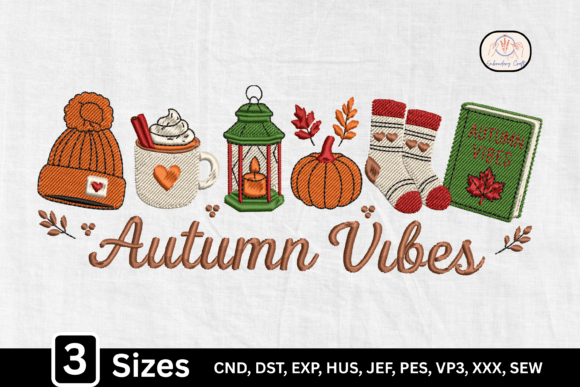
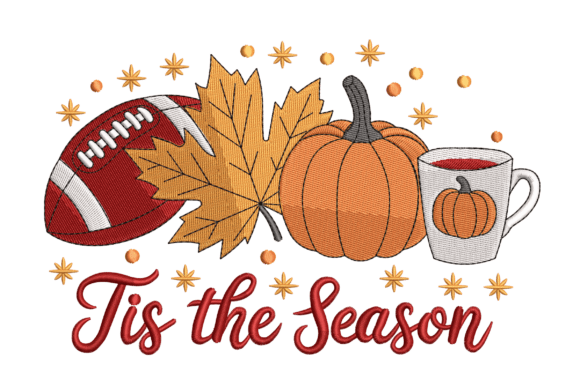
When I opened Autumn Fall for the first time, I didn’t see just another seasonal design—I saw a mood. The phrase “Tis the Season” in soft cursive feels like a whispered invitation, not a shout. Paired with that horizontal trio of autumnal elements—likely leaves, acorns, or perhaps stylized pumpkins—the layout breathes. It’s balanced but not rigid, decorative but never fussy. This isn’t a design screaming for attention; it’s one that earns it through warmth and restraint. For a craft business owner stitching holiday-themed tote bags or boutique kitchen towels, that quiet confidence translates directly into perceived value.
Real-World Test: Stitching It on a Linen Tea Towel
Last week, I used Autumn Fall on a natural linen tea towel—no lining, no backing, just medium-weight fabric and a light tear-away stabilizer. The cursive lettering held beautifully, with no skipped stitches or thread breaks, even in the tighter curves of the “S” and “e”. The three central graphics stitched cleanly, each distinct without bleeding into the next. Customers who’ve seen the finished piece consistently comment on how “handmade” and “intentional” it looks—not mass-produced, but thoughtfully curated. That matters. When you’re selling at a local craft fair or listing on Etsy, that impression builds trust before the buyer even reads your description.
Where Autumn Fall Shines
- Custom apparel: Works elegantly on the chest of a cream-colored sweatshirt or the back yoke of a relaxed-fit apron—its horizontal flow suits wide, flat surfaces without distortion.
- Baby embroidery: Gentle scale and open spacing make it ideal for onesies or burp cloths, especially when paired with soft pastel thread colors.
- Holiday gifts & nursery decor: Feels special without being overly literal—perfect for a neutral-toned baby blanket or a framed pillow cover in a Scandinavian-inspired nursery.
- Small shop merchandise: Stitches consistently across cotton, linen, and midweight twill, so it scales well from tea towels to embroidered patches for boutique staff uniforms.
- Digital product previews: Renders clearly in printable mockups—its clean lines and moderate detail translate well to both web thumbnails and printed lookbooks.
Where to Pause—and Plan Ahead
Autumn Fall isn’t built for every surface. On curved areas like cap fronts or tight-knit ribbed cuffs, the cursive script can compress or distort unless resized carefully. I’d avoid it on ultra-thin fabrics (like voile) without additional cut-away stabilizer, and skip stretchy knits entirely unless you’re using a high-quality adhesive backing and reducing stitch density manually. Dark fabrics demand careful thread selection—light gold or warm taupe works better than stark white for readability and texture. And while the design avoids tiny details, those inner curves in the lettering *will* show if your machine is under-tensioned or your needle is dull. Always test first.
What It Adds—Beyond the Stitch
This isn’t just about legibility or hoop compatibility. Autumn Fall elevates the entire perception of your handmade product. Its restrained elegance tells customers you care about composition, rhythm, and seasonality—not just speed or volume. For an Etsy seller bundling personalized fall gifts, it becomes a signature touch: consistent enough to build brand recognition, flexible enough to pair with different thread palettes and base items. Buyers notice that cohesion. They feel it in the weight of a well-stitched tote bag, the softness of a baby bib, the quiet pride in gifting something that doesn’t scream “holiday sale”—but still says “I chose this, just for you.”
Practical Designer Notes You’ll Actually Use
- Test on scrap fabric first—especially if you’re pairing it with textured weaves or blending threads.
- Check thread color contrast before finalizing—what reads clearly on screen may fade on oatmeal linen or get lost on charcoal fleece.
- Review stitch density in your embroidery software. If it’s dense near the lettering base, consider slightly loosening fill stitch spacing for breathable fabrics.
- Confirm hoop size—this design’s horizontal span means it likely needs at least a 5" x 7" hoop. Don’t assume it fits your smallest frame.
- Inspect small details at 200% zoom: look for any overlapping satin stitch edges or running stitch anchors that might snag.
- Test black-and-white mockups—many buyers browse in grayscale mode or print your listing. Does the shape and hierarchy still read?
- Compare light vs. dark fabric backgrounds in your design preview software—not just for contrast, but for perceived warmth.
- Use proper stabilizer: light tear-away for stable wovens, cut-away for knits or delicate linens.
- Verify licensing before selling finished items or reselling the digital embroidery file—commercial use rights aren’t automatic.
A Design That Grows With Your Craft Business
I keep returning to Autumn Fall because it doesn’t box me in. It’s equally at home on a $38 hand-stitched pillow cover sold in a downtown boutique and a $14 personalized sweatshirt for a school PTA fundraiser. It adapts without compromising. That flexibility is rare—and valuable—when you’re juggling client requests, seasonal inventory, and digital product launches. As a designer and reviewer, I don’t reach for it when I need flash. I reach for it when I want sincerity, clarity, and quiet craftsmanship to speak for itself. That’s why it’s become a steady part of my embroidery project toolkit—and likely will be in yours, too.