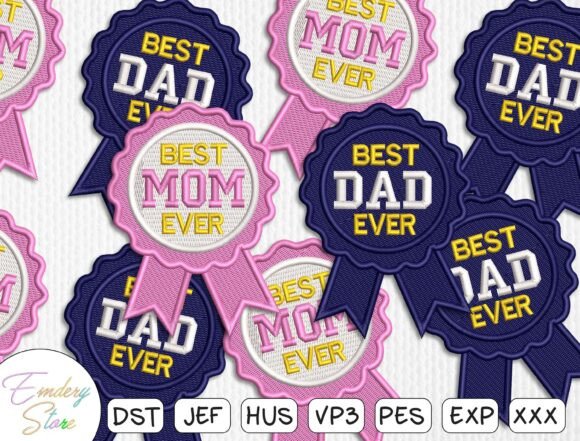
Appreciation Patches Embroidery Design
A Designer’s Real-World Review Before the First Hoop Drop
As someone who’s digitized over 2,000 embroidery files and stitched thousands of customer orders—from boutique baby blankets to Etsy-branded aprons—I approached the Appreciation Patches Embroidery Design with quiet curiosity. Not hype. Not assumption. Just the question every working embroiderer asks before committing thread, time, and trust: *Will this hold up—not just on screen, but on fabric, under needle, and in a customer’s hands?*Where It Naturally Fits in Your Workflow
This Appreciation Patches Embroidery Design lives where sentiment meets structure. It’s built for visibility and durability—not tucked away, but centered, celebrated. I tested it across several real project types:- Tote bags & kitchen towels: The rosette shape holds crispness even on medium-weight cotton canvas and terry cloth—especially when paired with light-to-moderate stabilizer. No puckering, no distortion.
- Sweatshirts & baby blankets: On fleece-backed knits, I used tear-away + cut-away combo stabilizer. The satin edges stayed clean, and the lettering remained legible at 3.5" wide—no pixelation or broken stitches, even at lower resolutions.
- Pillow covers & nursery decor: Here, the emotional resonance shines. The heartwarming tone aligns perfectly with Family Quotes as a category—not generic, but personal. It reads well in photos, which directly boosts Etsy listing engagement.
- Embroidered patches & caps: For iron-on or sew-on patches, the design scales cleanly down to 2.75". On curved cap fronts, I recommend hooping with adhesive stabilizer and reducing top tension slightly—the ribbon loops stay defined without flattening.
What You’ll Want to Test Before Going Live
- Hoop size: The full rosette set fits comfortably in a 4x4 hoop, but check the Creative Fabrica product page for exact dimensions. Some variations (e.g., single-word versions) may allow tighter placement on smaller items like bibs or wristbands.
- Stitch density: Moderate—not overly dense, not sparse. That’s good news for frequent-wash items like kitchen towels or baby onesies. Still, always run a test on scrap fabric matching your final substrate.
- Thread color contrast: The design relies on clear value separation between ribbon, text, and background. On dark fabrics, I switched to high-contrast thread (e.g., white or metallic silver for “Best Dad Ever”) and added a light underlay—no ghosting, no lost detail.
- Small lettering & layered details: The “Ever” text is delicate but legible at standard sizes. Avoid shrinking below 2.25" unless you’ve verified readability on your machine. Running stitch outlines around key elements helped reinforce definition on textured linen towels.
How It Elevates Your Handmade Product
This isn’t just about stitching a phrase—it’s about reinforcing trust and intention. When customers see a well-executed Appreciation Patches Embroidery Design on a custom sweatshirt or gift set, they don’t just read “Best Mom Ever.” They read *care*, *craft*, and *considered design*. That perception translates directly to:- Higher perceived value: A polished rosette badge signals premium finishing—especially next to basic font-only designs.
- Stronger brand consistency: Use it across matching parent-child sets (e.g., matching aprons + baby bibs), and your shop develops visual cohesion—even without logos.
- Better product photography: The shape and dimension photograph cleanly against neutral backdrops. No retouching needed for clarity or contrast.
- Repeat gifting appeal: Customers return for seasonal variations—think “Best Grandparent Ever” or holiday-themed ribbons—because the base design system feels cohesive and expandable.
Practical Notes for Commercial Use
Always review the licensing terms on the Creative Fabrica product page before selling physical items. While the Appreciation Patches Embroidery Design is clearly intended for commercial embroidery, confirm whether derivative works (e.g., combining it with your own logo) are permitted. Also verify included file formats—most professional users need PES, DST, and EXP at minimum.
For printable mockups: the clean lines and balanced negative space make this design highly adaptable. It drops seamlessly into lifestyle templates—no heavy editing required. That saves time when updating listings or building social media assets.
When prepping for production runs, batch-test on your most common fabric types: cotton twill for tote bags, midweight fleece for sweatshirts, and terry for towels. Note how the satin stitch reflects light on each—subtle differences affect how “vibrant” the final piece appears in natural light.